
Skip to content
Free Bee Removal

Found a Swarm? We'll Rescue Them for Free.

Don't call an exterminator. We remove and relocate live bees instead of killing them. Live bee removal is free. If a colony is inside a wall or other structure, we'll explain what's involved, including any repair or other costs, before any work starts.

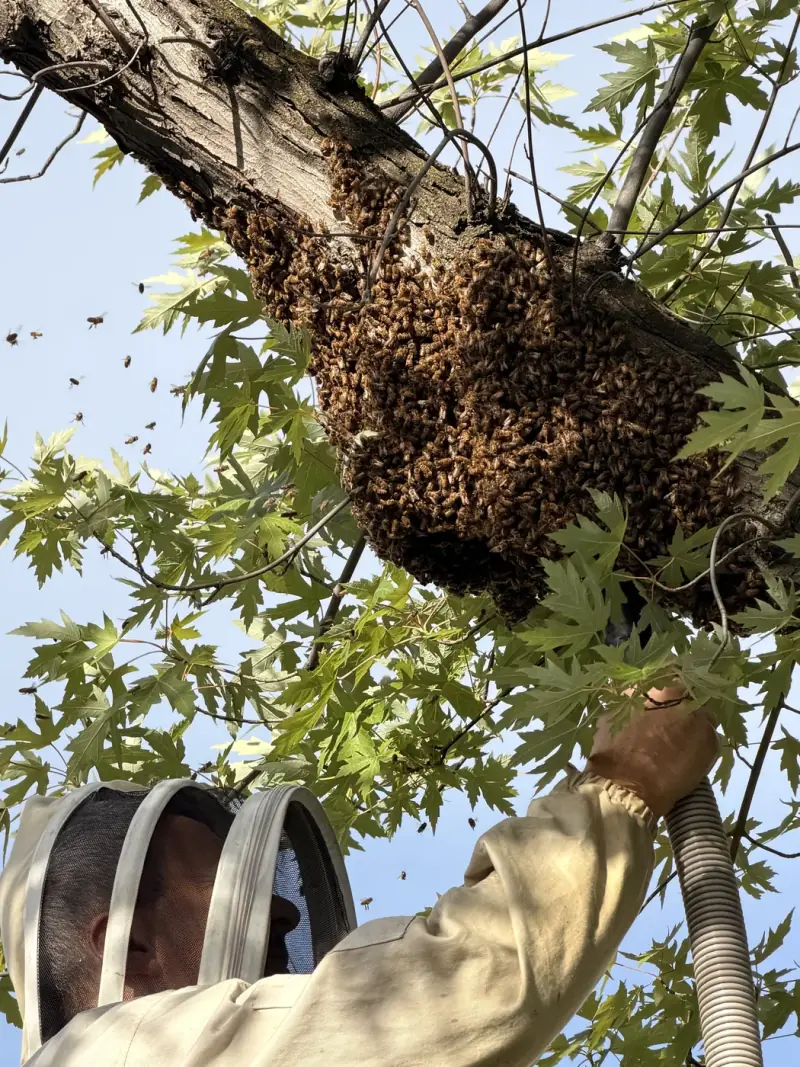
Looking up at a large honey bee swarm in a tree as a beekeeper reaches in to collect it
Reaching into a tree to collect a swarm
Report a Swarm

Tell us what you found

Fields marked * are required.

Live bee removal is free. If a colony is inside a wall or other structure, we'll explain what's involved, including any repair or other costs, before any work starts.

What to Expect

  1. Submit the form or call us

    Give us the location, a brief description, and your contact info.

  2. We assess the situation

    We follow up to confirm details and tell you when we can get there.

  3. Safe removal and relocation

    We remove the bees humanely and without spraying pesticides.

  4. Colony gets a new home

    The bees are relocated to a new home away from the removal site.

Prefer to talk to someone directly?

(916) 404-4294
Why We Do This

Because extermination isn't the answer

About a third of global crop production by volume comes from crops that benefit from animal pollination (Klein et al., 2007).

Many people who find a swarm call pest control because they don't know a free live removal option exists, and the bees get killed.

Donations help cover this work, and we move live bees to a new home instead of killing them.

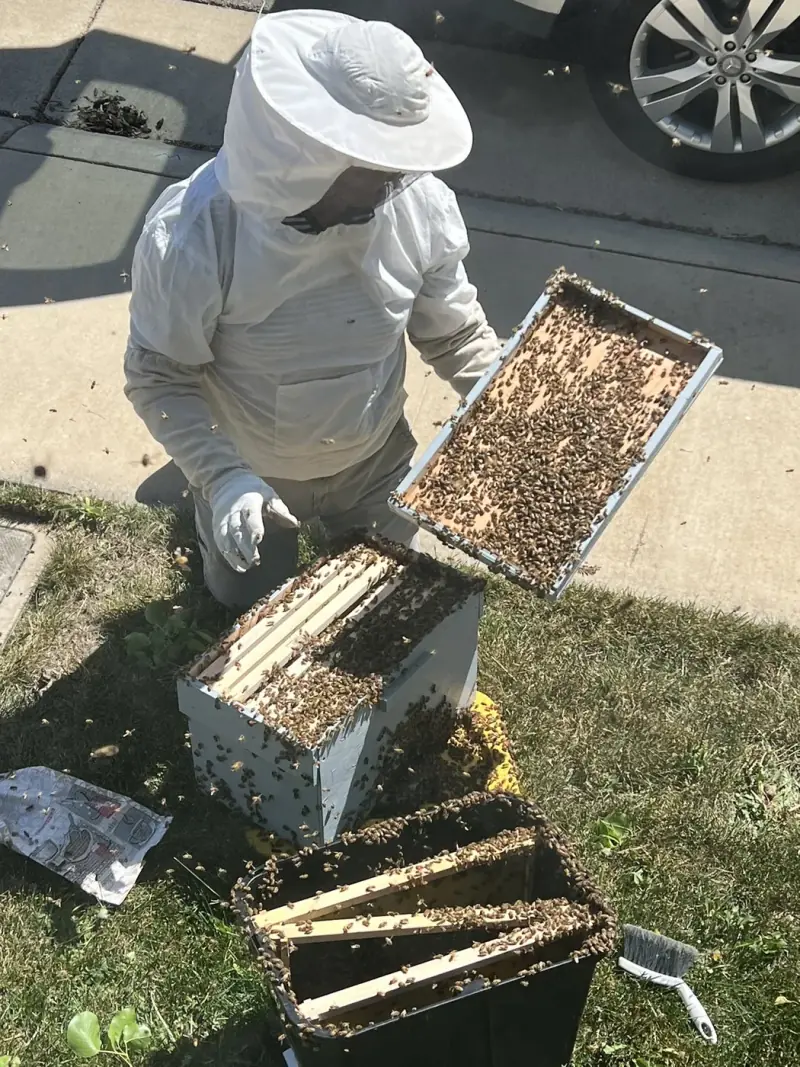
Beekeeper in a white suit transferring frames covered in bees into a hive box
Transferring frames into a hive box
55.6%

of managed U.S. honey bee colonies were lost from April 2024 to April 2025, a record (Auburn University / Apiary Inspectors of America).

2.81M

U.S. honey bee colonies were counted on January 1, 2026, so honey bees are not endangered (USDA NASS).

Over 1 in 4

North American bumble bee species face some degree of extinction risk (Xerces Society / IUCN).

Identification Guide

What are you looking at?

Not everything that buzzes is a honeybee. Here's a quick guide to the most common situations we get calls about.

Honeybee Swarm

Most common call

A cluster of thousands of bees hanging from a branch, fence, or structure. They look alarming but are actually at their most docile — they have no hive to defend. Swarms are temporary and will move on within 24–72 hours, but relocation is safer and keeps them out of your walls.

Established Hive

Act quickly

Bees entering and exiting a gap in a wall, eave, or tree cavity regularly. If they've been there for weeks, a full comb structure exists inside. Removal is more involved, and we'll explain any costs before work starts. The longer you wait, the larger the comb and the harder the extraction.

Bumblebees

Usually leave them

Rounder and fuzzier than honeybees, often nesting in the ground or in dense ground cover. Bumblebee colonies are small (50–500 bees) and naturally die off each fall. Unless the nest is in a high-traffic area, the best approach is usually to leave them alone for the season.

Wasps & Hornets

Not bees — refer out

Yellow jackets, paper wasps, and hornets are not bees — they don't pollinate and we don't remove them. They have slender, shiny bodies and a more aggressive temperament. Contact a licensed pest control company for wasp or hornet removal.

Common Questions

Before you call, read this

Most questions about our removal service come down to five things. If yours isn't covered here, just call.

(916) 404-4294

Live bee removal is free. If a colony is inside a wall or other structure, we'll explain what's involved, including any repair or other costs, before any work starts. The Bee Conservatory is a nonprofit, and donations help cover this work.

Need help right now?

Call us.

For urgent situations — bees inside a living space, a large aggressive swarm, or anything involving children or pets — skip the form and call directly.

(916) 404-4294

Sacramento Area Free Bee Removal